

Why Collection-Only Is Often the Most Profitable Online Model in Ireland
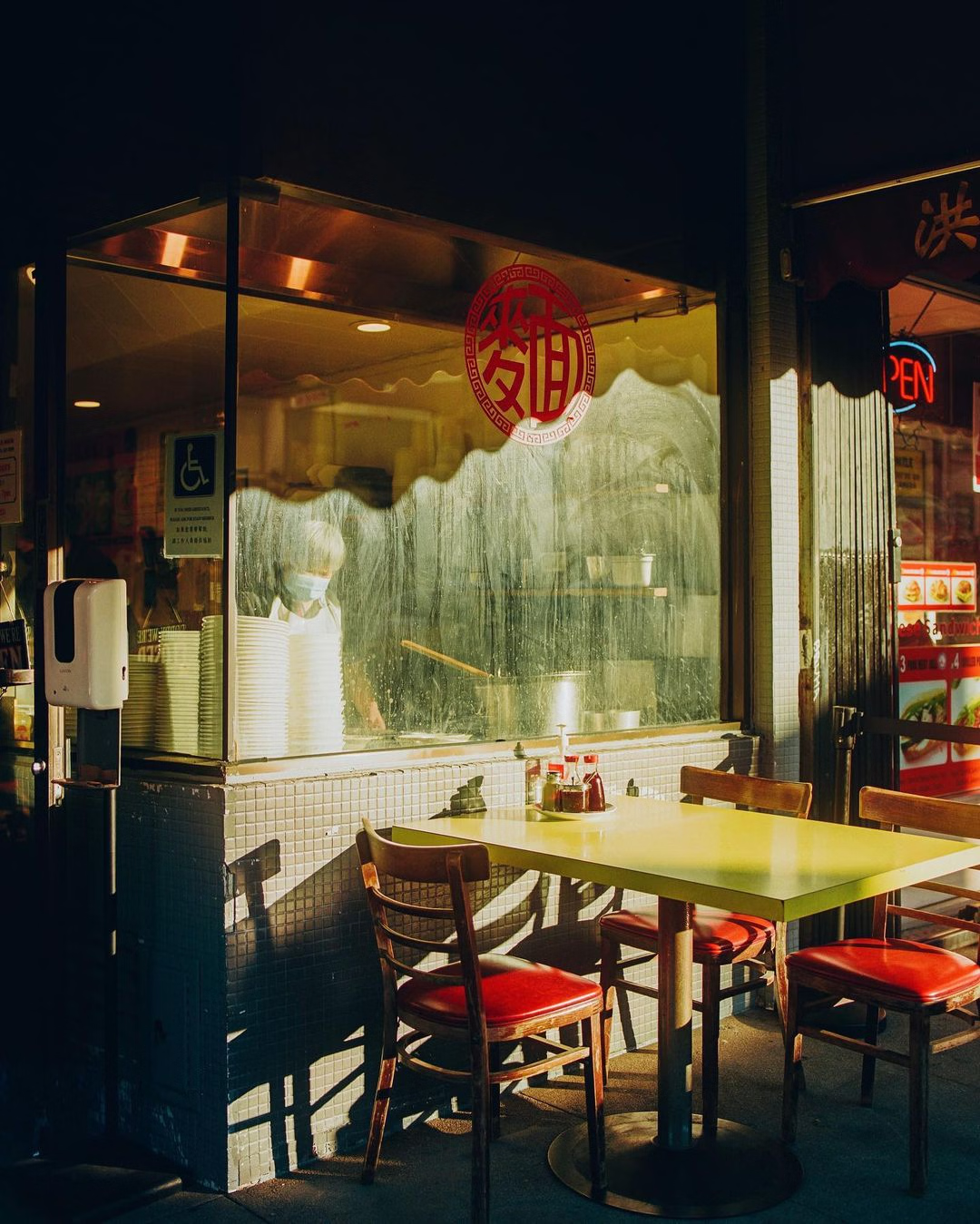
A neighbourhood café, a deli, a single-site takeaway with strong local footfall: for a big chunk of the Irish market, collection-only through a direct channel is the cleanest first move. Delivery is the decision you make later, from a position of strength.
Why Collection-Only Is Often the Most Profitable Online Model in Ireland
Delivery is the louder headline. Collection-only is quietly the better business for a lot of Irish operators, and it gets overlooked because the platforms do not advertise it.
A takeaway running collection orders through a direct channel at a single-digit commission is keeping most of its revenue, serving a customer who actually wanted the food fresh enough to pick up, and carrying none of the operational weight that delivery adds. For a chunk of the market (neighbourhood cafés, delis, bakeries, single-site takeaways with strong local footfall) that is the right shape.
This post covers the margin case, the operational case, and the honest answer to who collection-only does not work for.
Rate references below draw on publicly reported numbers for Just Eat and Deliveroo in Ireland, collated in our commission-rate sources document. Full references at the end.
The margin case
On publicly reported rates, rider-delivered orders through the two largest Irish delivery platforms sit anywhere from around 25 percent up to roughly 30 to 35 percent. Self-delivery contracts sit closer to 14 percent.
A collection order through a direct channel runs at a single-digit commission. On €10,000 a month in orders, that is the difference between keeping €7,000 and keeping €9,500. €2,500 a month, €30,000 a year, on the same food from the same kitchen.
That is before packaging, which is the quieter line item. A delivery order needs a heat-bag-safe container, a sauce pot that does not leak, a bag strong enough to survive a rider's bike. A collection order needs a box and a handle. Over a year the packaging delta adds up.
Then there are the complaints. Late deliveries. Wrong addresses. Food cold on arrival because the rider took a longer route or was handling two orders at once. None of those happen on collection, because the customer is the logistics.
The operational case
Collection-only runs a simpler kitchen.
Orders arrive with a ready-time. The kitchen works to that time and the food goes out hot, not sitting on the counter waiting for a rider who is ten minutes late. Prep is paced against known pick-up windows, not against the chaos of a three-bag rider rush at 7:15pm.
Staff are not explaining to a frustrated customer on the phone why their delivery order is 45 minutes late when the kitchen handed it to the rider 40 minutes ago. The food either left the kitchen or it did not, and the customer is either there or they are not.
The radius is also larger. Delivery caps you at whatever a rider can cover in twenty minutes on a bike. Collection is anyone happening to be in the area or driving past on their way home. A good takeaway in Salthill with a parking spot can be the default pit-stop for anyone commuting from the coast road, which is a bigger pool than a three-kilometre delivery zone.
Who it works best for
Neighbourhood operators with a local trade. Cafés, delis, bakeries, chippers. Customers who are already in the area, already passing by, already bringing the car or walking the dog.
Food that is not delivery-native. Anything that suffers in a bag. Fresh pastry, proper chips, anything with a crisp element. A ten-minute car ride from the shop still beats a twenty-minute cycle in a Deliveroo thermal bag.
Operators just launching online ordering. Collection is the lower-complexity starting point. Fewer operational fires, higher margin on each order, easier to get right before adding a delivery tier on top.
Kitchens with capacity constraints. Collection orders are more predictable. A slotted pickup window paces the kitchen in a way a spray of delivery orders does not.
Who it does not work for (honestly)
This is the part most posts on this topic leave out.
High-density urban delivery markets. A takeaway in Dublin city centre with a heavy delivery-trained customer base, where half the market orders to an office or a fourth-floor flat, is not going to convert that business to collection by changing the fulfilment option. Those customers want delivery.
Late-night operations. A 1am pizza on a Saturday is almost never a collection order. Nobody is walking or driving to pick it up at that hour. Delivery is not a choice.
Products designed for a wide radius. Specialist cuisines or destination menus that pull customers from an hour's drive away are not collection-first businesses. The radius pays for the platform's commission because the radius is the business.
Operators with a dine-in trade already saturating collection demand. If the counter is already slammed with walk-up orders during service hours, adding a collection layer on top is operational pain without new revenue.
The practical bits
Ready-time accuracy. The collection customer has a window and expects the food to be ready inside it. A kitchen ten minutes late once is forgiven. A kitchen ten minutes late every Friday trains customers to arrive fifteen minutes after the slot, and eventually to stop ordering.
Clear collection instructions. Where to go. Where to park. Whether there is a dedicated collection counter or they are joining the main queue. A takeaway with a separate click-and-collect shelf has a different operational rhythm than one pulling bags from the main service area.
Order pacing. Set the maximum orders per slot at the number the kitchen can genuinely produce. Better a twenty-minute wait communicated upfront than a ten-minute wait that becomes thirty.
Adding delivery later is easier than launching both at once
Collection-only does not mean collection-forever. Once the direct channel has volume, the ops are smooth, and the customer list is real, adding delivery is a decision made from a position of strength rather than from a platform's deadline.
The operators who get to delivery in the right order usually run a better delivery operation too, because they built the kitchen around reliable pick-up timing first and layered the delivery logistics on second.
Where SELLERS fits
SELLERS supports collection and delivery from the same storefront. Start collection-only at a single-digit commission. Add delivery when the volume justifies it, priced at a separate tier. One login, one dashboard, one customer list across both fulfilment types.
For a new direct channel in Ireland, collection-only through SELLERS is the cleanest first move. The margin works on day one, the operations are simple to get right, and the volume you build on collection becomes the foundation the delivery tier sits on top of later.
Sources
Takeover · for food businesses
Take back your margins.
5% commission. No monthly fee. No contract. Direct ordering, instant payouts, and full staff management — built for Irish food businesses.
Get early access